

Dr. Katherine Gardhouse, Ph.D., C.Psych
Founder & Director • Clinical & Health Psychologist • Assistant Professor • McMaster University

Where psychology, emotion, and the whole person meet.
Dr. Katherine Gardhouse is the founder of eFIT Institute and a clinical and health psychologist whose career has been shaped by a central question: what would mental health care look like if we treated the whole person rather than dividing their difficulties into separate parts or ignoring important aspects altogether?
That question ultimately led Katherine to develop eFIT and the Evolve Therapy Program. Her work is grounded in the understanding that our emotional lives are inseparable from our bodies, relationships, histories, behaviours, and environments. Psychological suffering rarely occurs in isolation, and Katherine believes our approach to healing should reflect that same complexity.
At the centre of her clinical work is helping people understand the deeper emotional patterns that shape how they experience themselves and the world around them. Rather than focusing exclusively on symptom reduction, Katherine helps members explore what may be happening underneath those symptoms. This can mean processing trauma, grief, shame, anxiety, or unmet emotional needs; understanding recurring relationship patterns; softening a deeply entrenched inner critic; or learning to recognize what difficult emotions are communicating and respond to them differently.
The work is not simply about feeling better. It is about understanding yourself deeply enough that the patterns shaping your life can actually change.
Working with the emotion beneath the pattern.
Katherine's primary therapeutic approach is Emotion-Focused Therapy (EFT). She has completed all three levels of advanced EFT training with pioneers in the field and receives direct clinical supervision from Dr. Les Greenberg, the primary developer of Emotion-Focused Therapy. This advanced training has deeply shaped both Katherine's clinical work and the psychotherapy model at the heart of the Evolve Therapy Program. Rather than approaching therapy as primarily an intellectual exercise, Katherine helps members access, understand, and work directly with the emotional experiences underlying longstanding patterns of distress.
Her work in EFT is complemented by extensive experience in trauma treatment, Dialectical Behaviour Therapy (DBT), Cognitive Behavioural Therapy (CBT), mindfulness, compassion-focused approaches, and somatic work. Katherine earned her Ph.D. in Psychological Clinical Science from the University of Toronto and completed advanced clinical training at the Centre for Addiction and Mental Health (CAMH), including work in complex trauma and borderline personality disorder. She later worked as a Staff Psychologist in the Eating Disorder Program at St. Joseph's Healthcare Hamilton and is a part-time Assistant Professor in the Department of Psychiatry and Behavioural Neurosciences at McMaster University.
Care was too fragmented. Evolve was designed to bring it back together.
Her clinical experience across trauma, eating disorders, emotion dysregulation, body image, and complex psychological difficulties has profoundly shaped how the Evolve Therapy Program was designed. Katherine repeatedly saw people working incredibly hard in psychotherapy while other important parts of their lives remained disconnected from treatment. Someone might be processing trauma while simultaneously struggling with food, feeling unsafe or disconnected from their body, withdrawing from relationships, or having difficulty accessing movement as a form of healing. Treating each of these concerns separately could miss how deeply they interact.
The Evolve Therapy Program was created to bring them back together.
Katherine remains actively involved across the major therapeutic components of the Evolve Therapy Program, working alongside eFIT's psychology, somatic, movement, and nutrition teams to ensure that members experience these areas as parts of one coherent approach to care. You are likely to run into her everywhere:-)




One person. One integrated model of care.
Katherine’s role is connective — helping ensure that psychotherapy, somatic work, movement, nutrition, and community are experienced as different ways of supporting the same person.
- Psychotherapy
innerMap + Emotional Processing
Within psychotherapy, Katherine co-facilitates eFIT's innerMap and emotional processing group therapy alongside the psychology team. Members first develop a deeper understanding of the emotional patterns, formative experiences, unmet needs, and protective strategies that may be organizing their difficulties. The work then moves beyond insight toward emotional processing, where members can begin transforming the underlying emotional experiences that continue to shape how they feel, relate, and respond in the present. Katherine works directly with members in group therapy throughout the week and provides clinical supervision to trainees learning this advanced therapeutic model.
- Embody
Somatic awareness + nervous system regulation
Her work also extends beyond the traditional therapy room. Katherine has completed training through Peter Levine's Somatic Experiencing International training program and works alongside trauma-informed osteopath Courtney Howlett to lead Embody, the somatic component of the Evolve Therapy Program. Their work helps members become more aware of physiological and emotional cues, develop greater capacity for nervous system regulation, and gradually reconnect with their bodies when stress, trauma, or years of disconnection have made that relationship difficult.
- Endure
Movement as part of mental health care
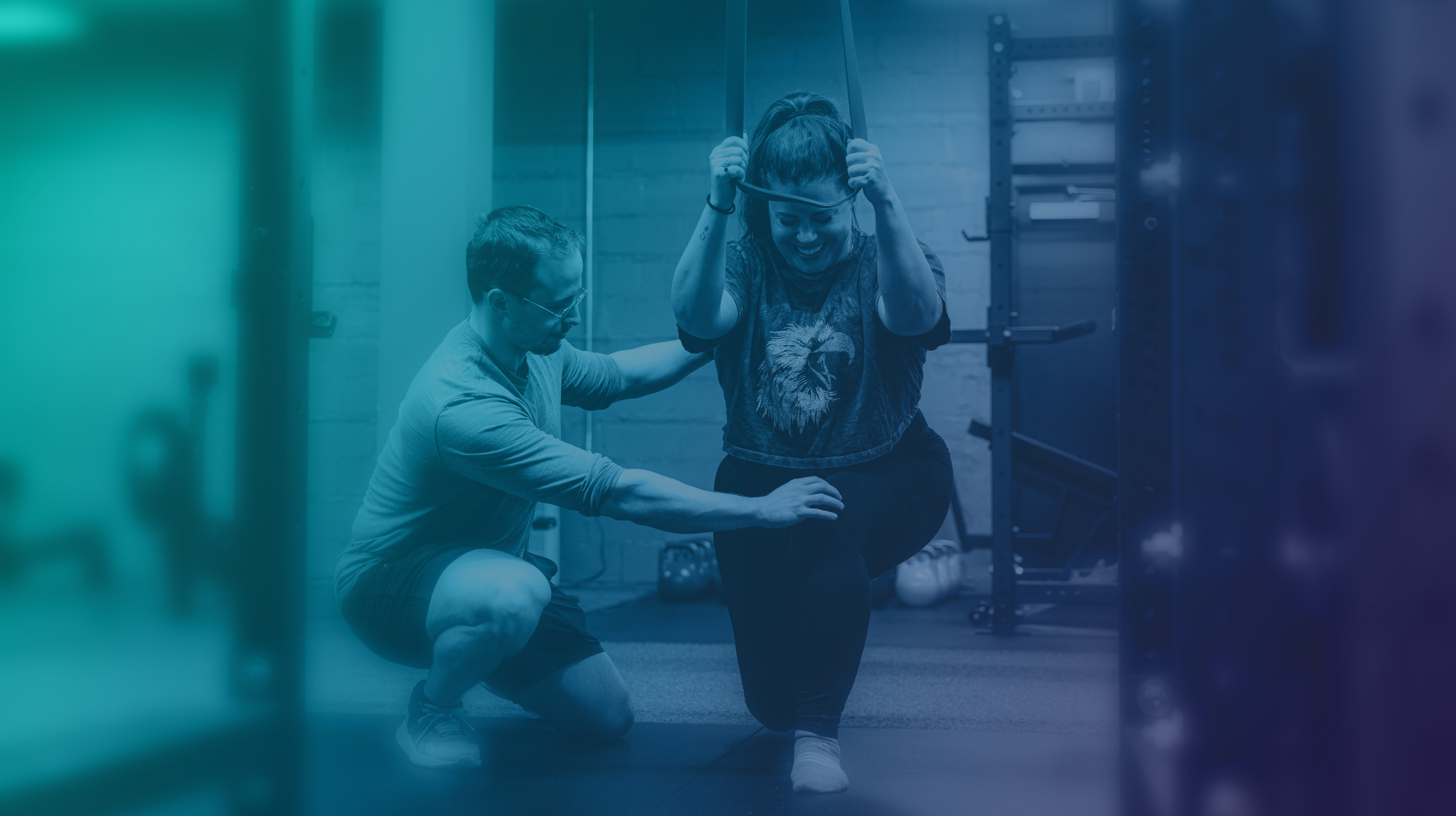
Movement is another important part of Katherine's approach to mental health. She works alongside Director of Physical Training Colin Oczkowski and Head Coach Michael Shepherd to deliver Endure, the physical training component of the Evolve Therapy Program. Katherine brings a psychological perspective alongside an extensive personal background in physical fitness, having spent years working with highly experienced coaches and exploring how movement can be used in service of mental and physical health. At eFIT, movement is not about forcing the body toward an external ideal. Members are encouraged to develop strength, confidence, physical capacity, and resilience while learning how movement can support mood, nervous system regulation, and a healthier relationship with their bodies.
- Eat!
Food, body image + self-worth
Katherine also developed Eat!, the nutrition component of the Evolve Therapy Program, alongside registered dietitian Erin O'Flaherty. Drawing from her experience across multiple eating disorder treatment settings, Katherine brings particular attention to the psychological relationships between food, emotion, body image, control, and self-worth. The program takes a balanced approach to nutrition that supports physical health and well-being without reproducing the rigid rules, shame, and perfectionism that can make relationships with food and the body more difficult. Body image recovery is a particular emphasis of Katherine's work, including helping members understand and change the beliefs, emotions, and behaviours that can make the body a source of chronic self-criticism or distress.
Integration is not a collection of services.
Across the Evolve Therapy Program, Katherine's role is ultimately connective. She helps ensure that psychotherapy, somatic work, movement, nutrition, and community are not simply services offered under the same roof, but different ways of understanding and supporting the same person.
That integration reflects the philosophy at the heart of eFIT. The goal is not to create a perfect body, eliminate difficult emotions, or become endlessly resilient. It is to understand yourself more deeply, process what has shaped you, learn to listen and respond to your emotional and physical needs, and develop the capacity to build a life that feels increasingly like your own.